Home › Asphalt Pathways, Sidewalks, and Trails
Add safe, accessible routes with asphalt pathway paving in Richmond, VA. We construct sidewalks, greenway trails, and multi use paths for parks, campuses, and communities. Our asphalt paths offer a smooth surface for walking, biking, and strollers and are built with proper drainage and edging for long term performance.
Precision Asphalt Richmond provides professional asphalt pathway paving throughout Richmond, VA, Virginia and the surrounding area. Our licensed, insured crew delivers safe, clean, on-time work with a free estimate before anything begins. Call (804) 409-4124 or request your free quote.
Asphalt Pathways, Sidewalks, and Trails in Richmond, VA
If you walk it, jog it, or roll a stroller on it, it should feel smooth, safe, and solid. At Precision Asphalt Richmond, we focus on designing and building asphalt pathways, sidewalks, and trails that fit how you actually use your property in the Richmond area, not just what looks good on a blueprint.
Asphalt pathway paving is a great option for residential walkways, HOA common areas, church campuses, school grounds, apartment communities, business parks, and municipal trails. Compared to concrete, asphalt typically offers a softer feel underfoot, easier repairs, and a darker surface that helps melt winter frost and light snow faster, which matters in our freeze and thaw cycles around Richmond.
We start every project with a site visit. We walk the route with you, talk about the traffic it will see (kids, bikes, golf carts, service vehicles), and note drainage patterns, shade from trees, and any existing trip hazards. If you are in the City of Richmond or nearby counties like Henrico or Chesterfield, we will help you understand whether your project is considered a private walkway or if it ties into public right of way, since that affects permitting and design standards.
How We Build Long Lasting Asphalt Pathways and Sidewalks
A solid pathway or trail is all about the base. Before any paving happens, the crew from Precision Asphalt Richmond strips sod and organic material down to stable subgrade, usually 6 to 8 inches below finished grade for a typical pedestrian path. In softer or poorly drained Richmond soils, we may undercut deeper and bring in compactable stone to prevent future settlement.
Next, we install a graded aggregate base, usually a compacted stone mix that is rolled in multiple passes. For most residential walkways we use 4 to 6 inches of compacted stone. For multi use trails or paths that occasionally carry maintenance vehicles, golf carts, or small utility vehicles, we may recommend 6 to 8 inches. We check slope with a laser level to make sure water sheds off the path instead of ponding on it.
Once the base is correct, we place hot mix asphalt. For pedestrian traffic, a 2 to 2.5 inch compacted mat of surface mix is typical. For heavier use paths, such as greenway connectors or HOA trails that see service trucks, we may lay a base course plus a surface course for added strength. Joints are staggered and edges are compacted tightly so they do not ravel out over time.
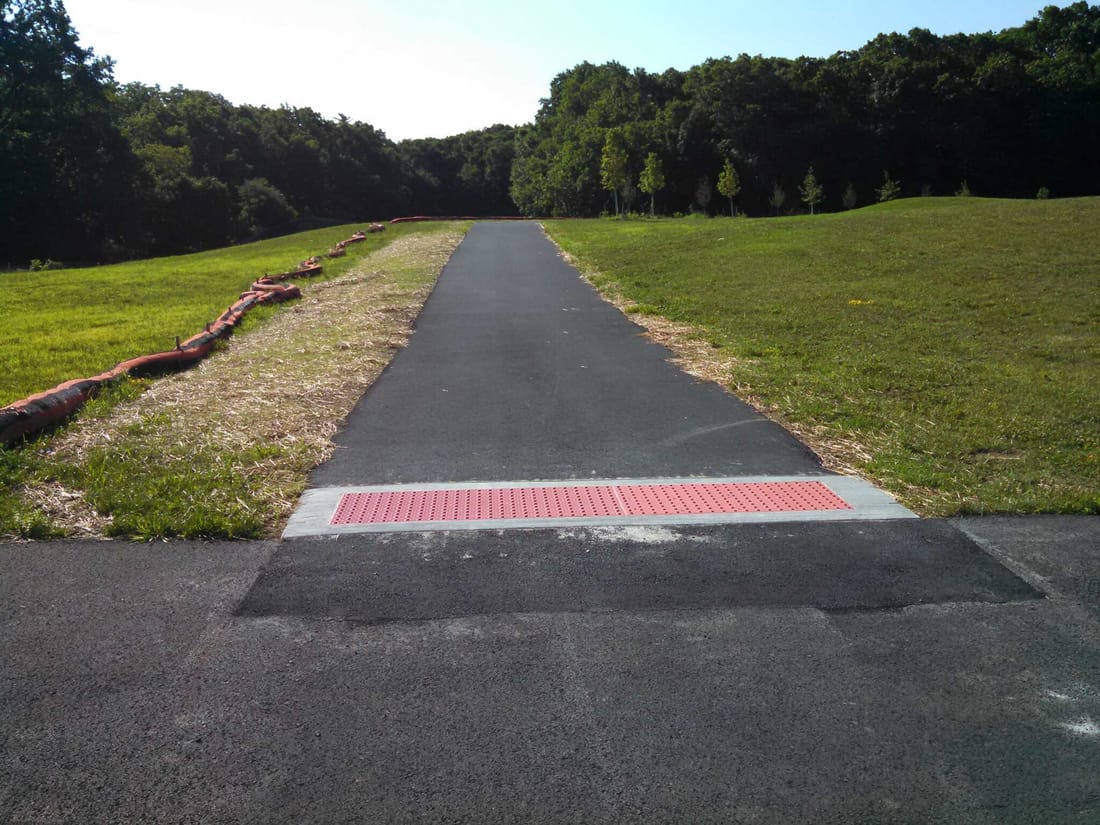
We also pay attention to transitions. Where your new asphalt pathway meets existing concrete, asphalt, or your driveway, we feather the thickness and compact carefully so there is no lip to catch a toe or wheelchair caster. The finished surface is rolled smooth, but we avoid making it slippery by using appropriate mix designs that perform well in Richmond's hot summers and occasional icy mornings.
Design Options for Walkways, Trails, and Common Areas
You have more design choices with asphalt pathways than you might expect. Precision Asphalt Richmond offers different width, alignment, and edge treatments so your new walk or trail looks intentional, not just paved space.
Width is usually the first decision. A simple residential walkway might be 3 to 4 feet wide, enough for one person or a person and a pet. Community sidewalks are often 5 feet to allow two people to walk side by side. Multi use trails inside neighborhoods, school campuses, or business parks may be 8 to 10 feet wide so bikes and pedestrians can pass safely. We can help you pick a width that matches your use without overspending.
Curvature and alignment also matter. A gently curving path often fits Richmond yards and wooded lots better than a straight shot. When we lay out curves, we keep turning radii generous so strollers and wheelchairs roll easily. For trails near wetlands or creeks, we lay out routes that stay above flood prone areas when possible, and we use swales and cross slopes that move water off the surface quickly.
For edging, you can keep a clean compacted soil shoulder or upgrade to stone, brick, or concrete borders where you want a more finished look. On HOA and commercial projects, we often install a narrow stone shoulder to help with drainage and reduce grass intrusion onto the path. For darker backyards or shaded trails, we can discuss adding low profile lighting sleeves adjacent to the path so your electrician can pull wire later without cutting the asphalt.
Permits, HOA Rules, and Local Considerations in Richmond
In the Richmond area, rules for asphalt pathway paving depend on where the path is located. If you are adding a private walkway inside your own yard that does not connect to the public sidewalk, you typically will not need a permit, although you should still call 811 before we dig so underground utilities are marked.
If your pathway or sidewalk ties into a public sidewalk, crosses a drainage easement, or is part of a larger commercial or church site, the City of Richmond or the county may require a simple site plan or approval. Precision Asphalt Richmond works with these requirements regularly and can coordinate with your engineer or builder to make sure our work matches the approved plans and ADA guidelines where they apply.
For HOAs around Richmond, Henrico, and Chesterfield, the main concerns are usually appearance, location, and drainage impact. We often help property managers and boards by providing clear drawings that show alignment and width, along with notes on how water will be directed away from buildings and neighboring lots. If your community has material restrictions that call for concrete in front yards, we can sometimes use asphalt for rear walking trails and amenity areas where flexibility and easy repairs provide better long term value.
We also plan around Richmond weather. The best time for pathway paving is generally spring through fall when temperatures are warm enough for proper compaction. In very hot spells we adjust our schedule and truck spacing so the mix does not cool too fast, which helps avoid seams and cold joints, especially on longer trails.
Costs, Common Issues, and Maintenance for Asphalt Pathways
Cost for asphalt pathways, sidewalks, and trails in Richmond is driven mainly by length, width, thickness, site access, and how much base preparation is needed. A short front walkway with easy truck access and firm ground will cost far less per foot than a winding HOA trail that runs behind homes and requires more hand work and wheelbarrowing. When we price a job, Precision Asphalt Richmond spells out how many inches of stone and asphalt we are including so you can compare apples to apples with other quotes.
Tree roots are a big concern in many Richmond neighborhoods. We look closely at large oaks, maples, and pines near the proposed path. Instead of cutting major structural roots, which can harm the tree and cause issues later, we may adjust the alignment a few feet or use root barrier in select spots. If we must cross a root zone, we may increase base depth and use geotextile fabric to help spread loads and reduce future buckling.
Drainage issues are another common problem. Paths that run along the bottom of a hill or beside a building can collect water. During our walkthrough we identify those low spots and design in cross slopes, shallow swales, or underdrain where appropriate. Standing water damages any paved surface over time, so solving drainage upfront is one of the best ways to extend the life of your asphalt.
For maintenance, a well built asphalt pathway usually needs very little in the first few years besides basic cleaning and edging. Over time, small surface cracks can develop from normal aging and temperature swings. Precision Asphalt Richmond offers crack sealing and patching so you can catch these early. For higher traffic community paths, a sealcoat every few years can refresh the appearance and slow down oxidation. When a section is damaged, asphalt makes it relatively easy to saw cut, remove, and replace just the affected area instead of tearing out the entire walkway.